 blog
How Much Does Roadside Assistance Cost in Practice
Last Updated: November 13, 2026
Quick Summary
Roadside assistance cost depends less on the service than on how you buy it: the same tow can cost nothing, a flat annual fee, or a painful per-incident bill depending on your provider type. Insurance add-ons, auto club memberships, standalone plans, and pay-per-use each price differently and cover different things.
- Insurance add-ons bill monthly on your policy but carry tight mileage and call limits.
- Pay-per-use has no ongoing fee but the highest single-event cost.
- Check the service-call limit, towing mileage, and whether the plan covers the vehicle or the driver.
- Without coverage you pay the full out-of-pocket bill, built from stacked line items rather than one flat rate.
- Buy coverage for the tow, but keep a real mechanic's number for the repair.
Table of Contents
- What Roadside Assistance Cost Looks Like Across Provider Types
- What Roadside Assistance Coverage Typically Includes
- Roadside Assistance Cost Without Insurance or a Membership
- The Cost to Tow a Car and How Mileage Limits Change It
- Roadside Assistance Cost for a Flat Tire
- Roadside Assistance Cost for a Dead Battery
- Coverage Restrictions, Reimbursement, and Household Plans
- Deciding Whether a Plan Is Worth the Cost for Your Vehicle
- Frequently Asked Questions
What Roadside Assistance Cost Looks Like Across Provider Types
Roadside assistance cost is the amount you pay, either as a recurring fee or a one-time charge, to have someone come fix or tow your vehicle when it breaks down. The honest answer is that the price depends less on the service than on how you buy it. The same tow can cost you nothing, a flat annual fee, or a painful per-incident bill depending on your provider type.
Here is the part most guides get wrong: they quote a single "average" number without telling you which provider type produced it. Insurance add-ons, auto club memberships, and standalone plans are not priced the same way, and they do not cover the same things. Below, we break down each model so you can compare like for like.
Annual and Monthly Plan Pricing
Before you commit, check three things: the service-call limit per year, the towing mileage included, and whether the plan covers the vehicle or the driver. That last point matters more than most people realize, and we will come back to it.
Insurance Add-Ons, Auto Clubs, and Standalone Plans
Each provider type prices differently, and the trade-offs are real. Auto club memberships bundle discounts and travel benefits alongside the towing, which appeals to some drivers and feels like clutter to others. Standalone plans sit in the middle: more coverage than a bare add-on, less bundling than a club.
The Insurance Information Institute's guide to auto insurance is a useful starting point for understanding what an add-on actually adds to a standard policy.
| Provider Type | Billing | Typical Strength | Typical Weakness |
|---|---|---|---|
| Insurance add-on | Monthly, on policy | Low cost, easy to add | Tight mileage and call limits |
| Auto club membership | Annual | Bundled discounts, travel perks | Higher fee, perks you may not use |
| Standalone plan | Monthly or annual | Balanced coverage | Fewer extras than a club |
| Pay per use | Per incident | No ongoing fee | Highest single-event cost |
What Roadside Assistance Coverage Typically Includes
Coverage usually includes towing, jump-starts, flat-tire changes, lockout help, fuel delivery, and minor roadside repairs. Winching, if you are stuck off the pavement, is sometimes included and sometimes an add-on. The list looks generous on paper, but the limits behind each item are where the real cost lives.
A plan with unlimited service calls is worth more than a plan with three calls if you drive an older vehicle. A plan with generous towing mileage is worth more if you commute long distances. Read the per-incident limit on every line, not just the headline coverage list. That single habit will save you more money than shopping around for a lower premium.
Roadside Assistance Cost Without Insurance or a Membership
Without coverage, you pay the full out-of-pocket cost for every service call, and that bill is built from several line items stacked on top of each other rather than a single flat rate. Understanding the stack is what lets you compare a pay-per-use bill against a plan premium honestly.
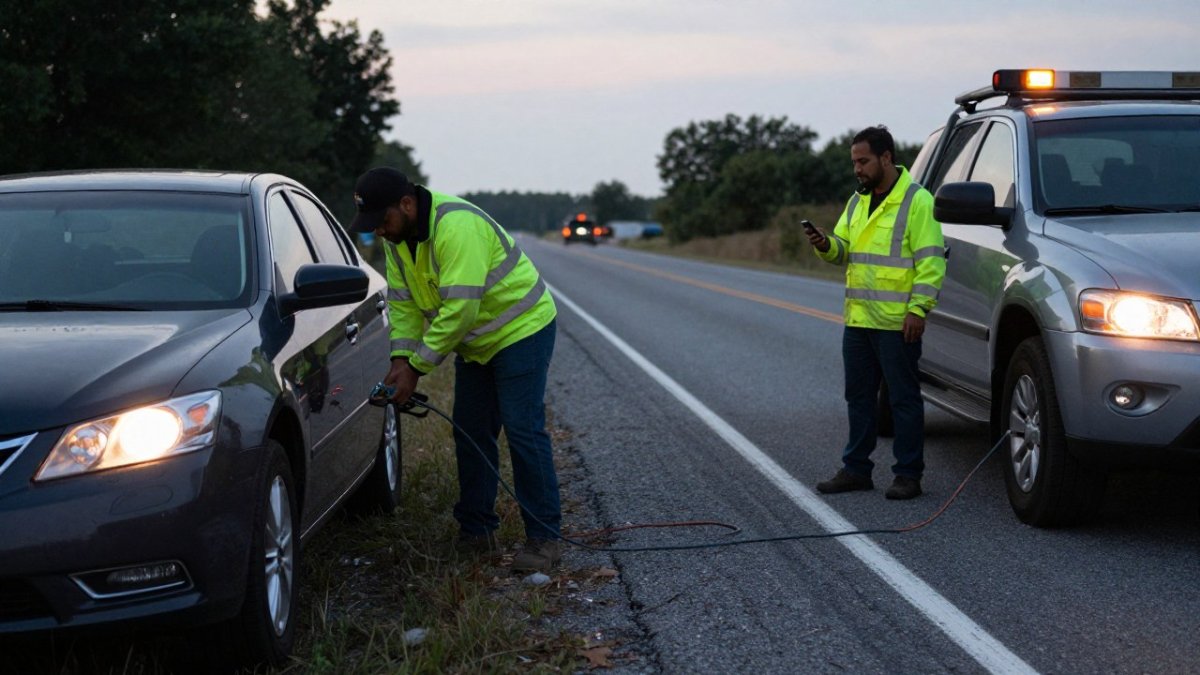
The Federal Trade Commission's consumer advice on auto repairs is worth reading before you agree to any roadside work, because it explains your right to a written estimate. Ask for the dispatch fee, the per-mile rate, and any after-hours charge before the truck rolls. A reputable operator will give you all three without hesitation.
Watch out: the per-mile rate quoted on the phone is often the rate for the first tow truck dispatched, not the total. If the operator has to call a second, heavier truck for a winch-out or a vehicle that will not roll, you can be billed for both. Confirm whether the quote covers recovery or just transport.
A practical way to decide: estimate your likely callouts per year, multiply by the pay-per-use cost of each service you would actually need, and compare that total to the plan premium plus any per-incident charges the plan still imposes. If the plan's towing mileage limit is shorter than your typical tow distance, add the overage to the plan side of the comparison, a cheap plan with a short tow limit can cost more than it looks.
The Cost to Tow a Car and How Mileage Limits Change It
The cost to tow a car is driven largely by distance. Most plans include a set towing distance and charge per mile beyond that.
Watch out: drivers routinely assume "towing included" means "towed anywhere." It does not. If your plan covers a short distance and your preferred shop is farther out, you pay the difference out of pocket. Confirm the mileage limit before you need it, not after the truck is hooked up.
Roadside Assistance Cost for a Flat Tire
Roadside assistance cost for a flat tire is usually the lowest of the common services, because a tire change is quick work. If you have a usable spare, many plans cover the labor at no extra charge. If the tire cannot be repaired and you need a replacement, the cost of the tire itself is almost never covered.
That distinction catches people off guard.
Roadside Assistance Cost for a Dead Battery
Roadside assistance cost for a dead battery covers a jump-start, and that is where the coverage usually stops. A jump gets you moving; it does not replace a battery that has reached the end of its life. If the battery will not hold a charge, you are looking at a replacement, and that is a repair, not a roadside service.
This is the point where a roadside plan and a mobile mechanic part ways. A plan dispatches a jump. For trucks, diesel rigs, and equipment that cannot be jump-started easily, having a mechanic who comes to you is often the faster route.
Coverage Restrictions, Reimbursement, and Household Plans
The headline coverage list, towing, jump-starts, lockouts, fuel delivery, flat-tire changes, is similar across provider types, so the real comparison happens in the limits behind each line.
The restrictions that most often change the final bill:
- Service-call limits. Many plans cap the number of calls per year, and some cap calls per service type. A plan with three total calls is worth less to an older-vehicle owner than a plan with unlimited calls, even at a higher premium.
- Per-incident dollar caps. A plan may cover towing up to a set dollar amount per incident rather than unlimited mileage. Once the cap is reached, you pay the difference at the provider's rate.
- Towing mileage limits. The included distance is usually modest, and per-mile charges apply beyond it. Confirm the limit against your typical tow distance before you buy.
- Exclusions. Accidents, off-road recovery, winching, and vehicles that are not roadworthy are commonly excluded or priced as add-ons. A breakdown caused by a collision is usually an insurance claim, not a roadside claim.
- Network-dispatch requirements. Some plans require you to call the plan's dispatch line and use its network. If you call an independent operator yourself, the plan may reimburse only a capped amount or nothing at all.
- Waiting periods. New memberships sometimes impose a waiting period before towing benefits apply, which matters if you are buying coverage because a vehicle is already unreliable.
If you have questions about coverage limits before committing, our team can walk you through the details so you know exactly what a plan does and does not include.
Deciding Whether a Plan Is Worth the Cost for Your Vehicle
A plan is worth the cost when your likely out-of-pocket exposure is higher than the premium. Run the break-even math honestly: one long tow, one lockout, and one jump-start in a year, priced at pay-per-use rates, usually exceeds an annual membership fee. If you drive an older vehicle, tow a trailer, or run equipment for a living, that math tips faster.
For vehicles and equipment that need actual repair rather than a tow, a roadside membership only gets you to the side of the road. Our mobile repair services bring a mechanic to your vehicle or equipment, and you can confirm we cover your area before you call. We give free estimates, warranty our repairs, and match a written estimate, so you are never guessing at the final bill.
The practical rule we give customers: buy coverage for the tow, but keep a real mechanic's number for the repair. The two solve different problems, and confusing them is how people end up paying twice.
Breakdowns never happen at a convenient time, and the last thing you need is a surprise bill on top of a dead truck. M&D Repair Services brings mobile repair directly to your vehicle or equipment, with free estimates, a warranty on repairs, and price matching against a written estimate. Get started with M&D Repair Services and keep your equipment running instead of waiting on a tow.
Frequently Asked Questions
Does it cost money to call roadside assistance?
It depends on what you already have. Ask for the rate before dispatch confirms the job so there are no surprises on arrival.
Is it worth paying for roadside assistance?
Run the math on your own driving. Add up what a tow, a jump-start, a lockout, and a tire change would cost you out of pocket in a year, then compare that to the annual plan fee. Drivers with older vehicles, long commutes, or several vehicles in the household usually come out ahead. Drivers with a newer car under a manufacturer perk or a credit card benefit may already be covered.
How much does roadside assistance cost for a dead battery?
A jump-start is one of the cheapest service calls, and many plans include it at no extra charge. If the battery needs replacing rather than jumping, you pay for the battery itself plus any installation labor. Plan limits usually cover the service call, not the part. Confirm whether your provider stocks batteries on the truck or whether you will need a follow-up visit.
Can one plan cover multiple vehicles or a whole household?
Yes, and this is where the savings usually appear. Many providers offer household or multi-vehicle tiers that cover a spouse, a teen driver, and every car registered at the address for one fee. Compare the household rate against buying separate plans per vehicle. If you also run work trucks or equipment, check whether commercial vehicles are excluded before you rely on the plan.