 How-to
How Much Does Semi Truck Repair Cost?
Last Updated: November 16, 2026
Quick Summary
Semi truck repair cost depends on mileage, age, how hard the truck works, and where the work gets done, so bills vary widely between trucks. Repair costs split into predictable wear items like brakes and tires and unexpected failures like engine, transmission, and electrical work that carry the largest bills. Your written estimate is the only number that counts, so get an itemized quote before authorizing any work.
- A typical steer-axle brake job commonly lands in the $600-$1,200 range at an independent shop.
- A drive-axle brake job with drums often runs $900-$1,800.
- Slack adjusters and air valves add $150-$400 each depending on position.
- Track maintenance cost per mile per truck, not per fleet, to expose problem units.
- Get a written estimate that itemizes parts, labor hours, and machine-shop work before authorizing an overhaul.
Table of Contents
- What Drives Semi Truck Repair Costs
- Semi Truck Maintenance Cost: What Routine Service Runs
- Semi Truck Maintenance Costs per Mile
- Semi Truck PM Service Cost and What a PM Covers
- Repair Costs by System: Engine, Transmission, Brakes, and Electrical
- Semi Truck Tire Replacement Labor Cost and Shop-Type Premiums
- How to Get an Accurate Semi Truck Repair Estimate
- Book a Mobile Semi Truck Repair Estimate
- Frequently Asked Questions
What Drives Semi Truck Repair Costs
Semi truck repair cost depends on four things: mileage, age, how hard the truck works, and where the work gets done. Two trucks with the same odometer can produce wildly different bills, the one hauling heavy loads over mountain grades wears brakes, tires, and drivetrain parts far faster than a highway cruiser running light.
M&D Repair Services handles mobile diagnostics and repairs for trucks, diesel vehicles, and heavy equipment.
Mileage, Age, and How the Truck Is Used
Mileage sets the baseline: components wear in proportion to distance traveled, and every service interval is built around odometer readings. Age adds a second layer, rubber dries out, seals weep, and wiring connectors corrode whether the truck rolls or sits.
Usage decides how fast both happen. Stop-and-go delivery work punishes brakes and clutches, while long-haul highway miles are gentler on the drivetrain but stack up odometer hours quickly.
Skipping routine service to save money can lead to costlier problems later, such as roadside breakdowns with towing charges attached.
Semi Truck Maintenance Cost: What Routine Service Runs
Semi truck maintenance cost is the predictable half of your budget, and the half you control. Routine service covers fluid changes, filter replacement, belt and hose inspection, brake adjustment, tire rotation, and a full chassis lube, modest jobs when done on schedule.
The spending pattern is uneven. Most months a truck needs little beyond fuel and a wash. Then a PM interval lands and the bill jumps.
Preventive maintenance also protects the expensive systems. Fresh coolant extends water pump life. Clean oil keeps bearings alive. Adjusted brakes stop squarely and save tires.
Semi Truck Maintenance Costs per Mile
Semi truck maintenance costs per mile give you the cleanest budgeting benchmark.
Owner-operators should track this number per truck, not per fleet. Averages hide problem units. One truck running double the fleet's per-mile cost is usually telling you something major is coming.
The figure moves with duty cycle and terrain: mountainous routes and heavy-haul work run higher than flatland highway units. Compare your number to your own history first, then to similar operations.
Semi Truck PM Service Cost and What a PM Covers
Semi truck PM service cost buys a fixed checklist, and the checklist is the point.
Two service levels are common. A lighter "A" service covers fluids and inspection. A heavier "B" service adds driveline checks, more filters, and deeper brake work. Intervals follow the manufacturer's schedule and your duty cycle, with severe service shortening them.
Mobile PM service changes the math on downtime. A technician comes to your yard or jobsite, performs the service between runs, and leaves a written report that serves as your early-warning system for the next big repair.
Repair Costs by System: Engine, Transmission, Brakes, and Electrical
Repair costs by system split into two groups: wear items that come around on a schedule (brakes, tires, filters) and failures that arrive without warning (engine, transmission, electrical), which carry the largest bills. Repair costs vary widely by truck, engine, and shop. Your written estimate is the only number that counts; contact M&D Repair Services for a current quote.
Brakes and Air System
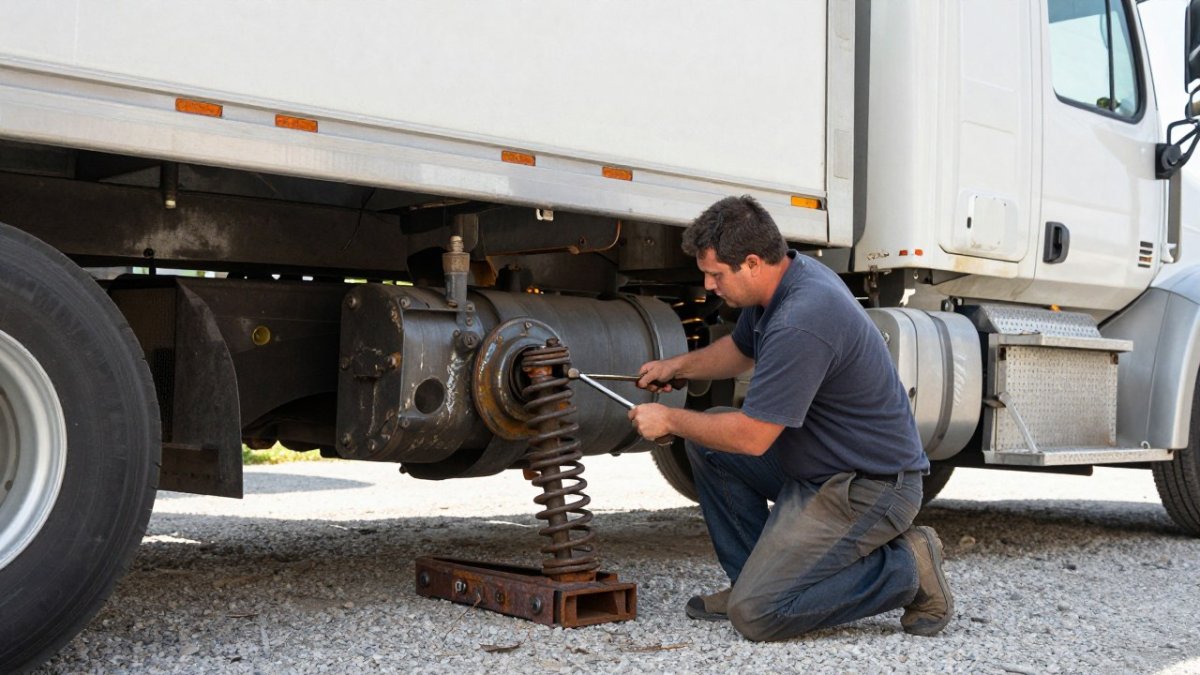
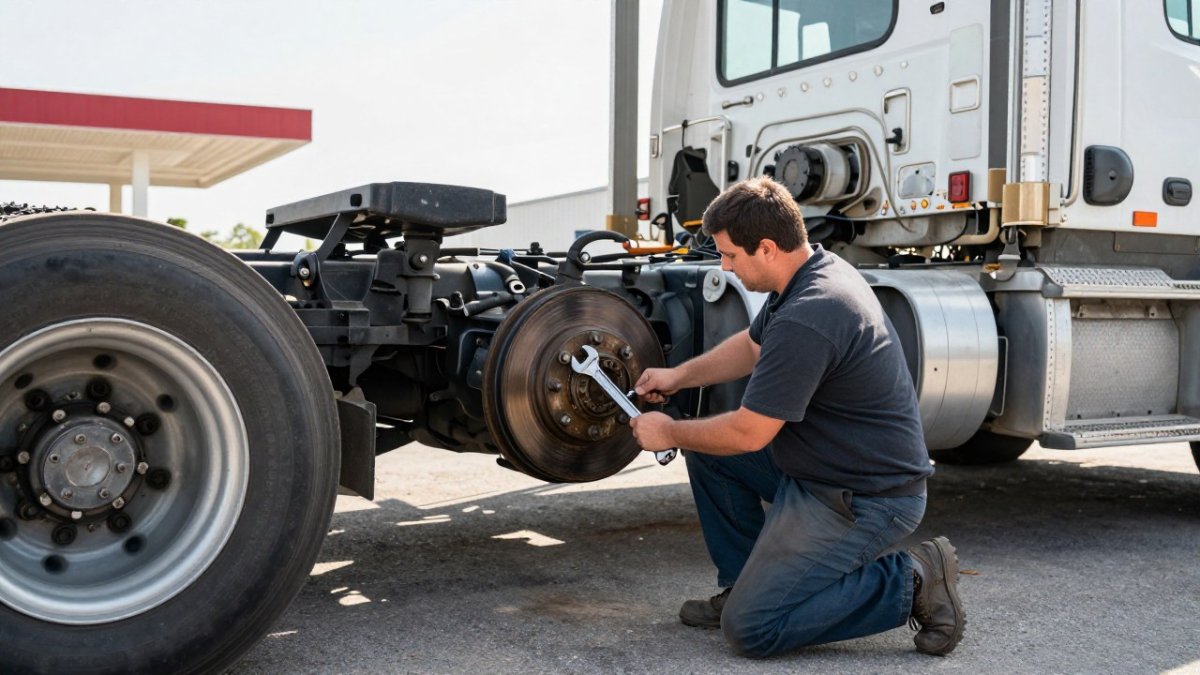
Brake work is the most predictable major expense. Linings, drums, slack adjusters, and air system components wear on a known curve. A typical steer-axle brake job (linings and drums, both sides) commonly lands in the $600-$1,200 range in parts and labor at an independent shop. A drive-axle brake job with drums often runs $900-$1,800. Slack adjusters and air valves add $150-$400 each depending on position. Catching wear at inspection beats catching it on a downgrade, and it keeps you inside the inspection and maintenance obligations that FMCSA vehicle maintenance guidance places on commercial vehicles.
Tires and Wheel-End Work
Tires are a consumable, and the labor to mount, balance, and dispose of them is a cost to plan for. Wheel seals, bearings, and hub work are easier to manage when caught early.
Cooling System
Hoses, thermostats, and coolant flushes are modest on their own but add up quickly when deferred.
Electrical and Diagnostics
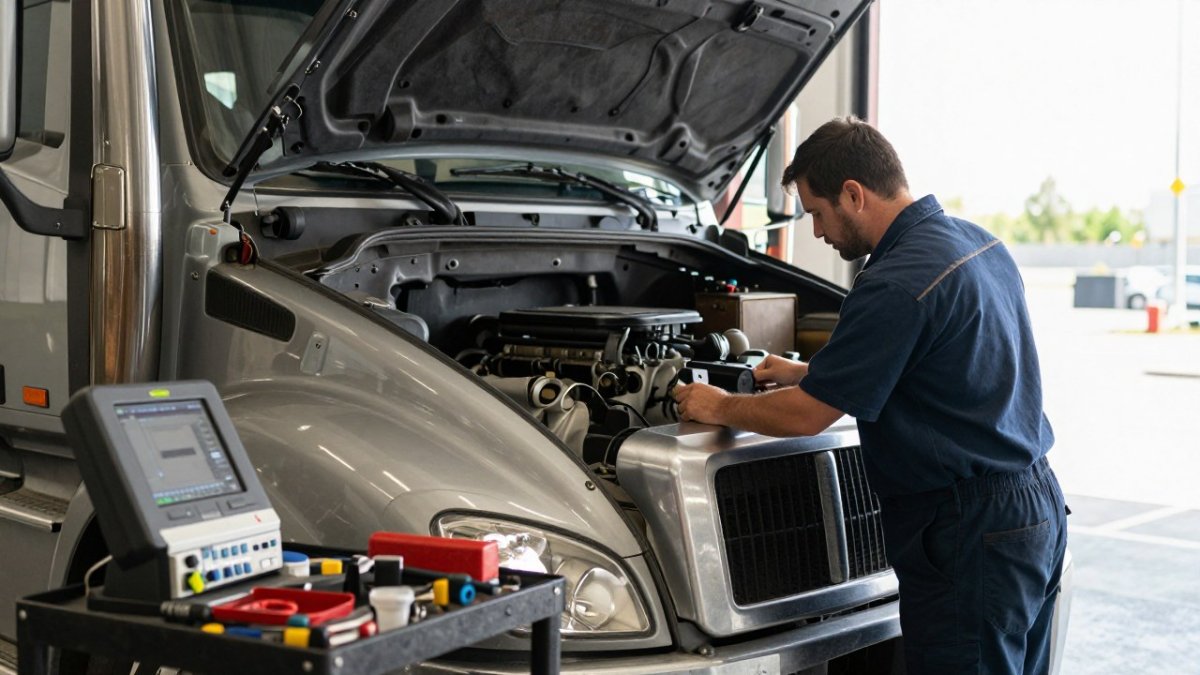
Electrical diagnostics deserve their own line. Modern trucks run on modules and sensors, and finding a fault can take hours of labor before any part is replaced. Diagnostic time at the shop's labor rate is the biggest variable. Throwing parts at a warning light is a common mistake; proper electrical diagnostics with the right tools costs less than guessing.
Transmission and Driveline
Transmission work ranges from a clutch replacement to a rebuild. Transmission and driveline work ranges from clutch replacement to rebuild, and driveline components are easier and less costly to address when caught early.
Engine Overhaul and Long-Block Replacement
Engine overhaul is the biggest single decision in a truck's life. An in-frame overhaul rebuilds the engine in the chassis, while a long-block replacement swaps the core engine for a remanufactured unit. The better option depends on the condition of the block and crankshaft and how much service life the truck has left.
Watch out: get a written estimate that itemizes parts, labor hours, and machine-shop work before authorizing an overhaul. Vague engine quotes are where budgets die.
Semi truck brake job and air system repair costs
Semi Truck Tire Replacement Labor Cost and Shop-Type Premiums
Tire replacement labor covers mounting, balancing, valve stems, and disposal, and it varies by shop type. Contact M&D Repair Services for current pricing.
Shop type drives the labor rate more than the job does. Mobile service brings the technician to you, which can reduce the trip and downtime that come with taking a truck to a shop.
Parts availability is the hidden variable. Common tires and brake components are stocked widely. A proprietary sensor or a rare engine part can sit on backorder and stretch a two-day job into a week.
| Shop Type | Labor Rate Position | Strength | Trade-off |
|---|---|---|---|
| Dealership | Highest | Factory tools, warranty work | Longest waits, highest bill |
| Independent shop | Middle | Broad experience, flexible scheduling | You arrange the tow or drop-off |
| Mobile repair | Varies by job | Comes to your yard, less downtime | Parts sourcing can add time |
How to Get an Accurate Semi Truck Repair Estimate
An accurate semi truck repair estimate starts with a proper diagnosis, not a phone guess. Ask for a written quote that separates parts, labor hours, diagnostic charges, and any machine-shop work, then compare it line by line against the diagnosis so you can compare two shops on the same basis.
The Four Numbers Behind Every Estimate
Every repair estimate is built from four inputs: the labor rate per hour, which varies by shop type and region; the labor hours the job is expected to take, where two shops can quote the same job very differently; the parts cost, including whether the part is new, remanufactured, or used; and the diagnostic fee plus any travel or call-out charge. A shop that quotes a single lump sum without breaking out those four numbers is asking you to trust a guess.
A Simple Estimate Worksheet
Use this checklist to compare written estimates:
- Symptom or fault code as diagnosed, written down
- Diagnostic fee stated up front, and whether it is credited toward the repair
- Labor rate per hour, and expected hours per job
- Parts: new, remanufactured, or used, with part number and warranty on each
- Machine-shop work itemized separately, if any
- Travel or call-out charge for mobile service, and after-hours premium
- Minimum labor charge, if the shop has one
- Warranty terms on the repair itself
- Timeline and what happens if additional faults appear
- Whether the estimate changes if the diagnosis shifts
Add the labor rate times the hours, the parts, the diagnostic fee, and any travel charge to get a comparable total. Two shops quoting the same job can differ because of labor hours or whether parts are new or remanufactured.
Mobile, Roadside, Dealership, and Independent-Shop Charges
Where the work happens can change the total. Mobile and roadside service may include a call-out fee and after-hours charges, and towing, if the truck cannot be moved, is a separate charge. Ask each provider which charges apply before you approve the work.
Repair Versus Replace
At some point the estimate forces a bigger question: is this repair worth it on this truck? Weigh the repair cost against the truck's current value, its age, the downtime the repair will cause, and the repairs you can reasonably expect in the next year.
A transparent shop explains why a part is being replaced, not just what it costs. FTC guidance on auto repair estimates and billing backs your right to a written estimate and an itemized bill, so ask for both and keep them.
If you want to know why a shop is a trustworthy choice for an accurate estimate, learn more about our services and how we build quotes. For a sense of what a mobile call-out adds to the total, read what a mobile mechanic call-out actually costs.
Book a Mobile Semi Truck Repair Estimate
Booking a mobile semi truck repair estimate removes the tow, the drop-off, and the lost day. A technician comes to your yard, diagnoses the fault on site, and hands you a written estimate before any work begins.
M&D Repair Services brings mobile repair to trucks, diesel vehicles, farm equipment, and construction machinery, with free estimates, a warranty on repairs, and price matching against any written estimate.
To get moving, find a mobile diesel mechanic near you and request your estimate. You can also check our extensive service areas to confirm we cover your location, or see why drivers choose us for transparent, on-site work.
Your truck losing a day in a shop costs more than the repair itself. Get a written estimate at your own yard, approve the number before work starts, and keep the truck earning.
Frequently Asked Questions
What is the most expensive repair on a semi truck?
Engine work is often among the larger repair expenses, and a full overhaul or long-block replacement can mean significant downtime. Because these jobs vary so much by engine model and parts availability, ask for an itemized written estimate that separates labor hours from parts before you approve anything.
How much does semi truck repair cost compared with routine maintenance?
Routine maintenance is predictable and spread across the year; unexpected repairs are lumpy and often land at the worst time. That is why semi truck maintenance costs per mile matter more than any single invoice. Tracking your own cost per mile lets you budget for repairs instead of absorbing them as surprises, and it shows you when a truck's repair frequency has climbed past the point where replacement makes more sense.
What affects the cost of mobile semi truck repair?
Three things move the number most: where the truck is serviced (a roadside or mobile call carries a premium over a shop bay), how quickly parts can be sourced, and how much diagnostic time the fault requires. Electrical and aftertreatment faults often take longer to trace than mechanical ones. Ask upfront whether the diagnostic fee is credited toward the repair and whether the quote includes travel.
How can I get an accurate semi truck repair estimate?
Describe the symptom, not your guess at the cause, and give the truck's mileage, engine model, and service history. A written estimate should list labor hours at a stated labor rate, parts with part numbers where possible, the diagnostic charge, and any travel or call-out fee. Confirm the warranty terms and how the shop handles a repair that does not fix the problem before you authorize work.